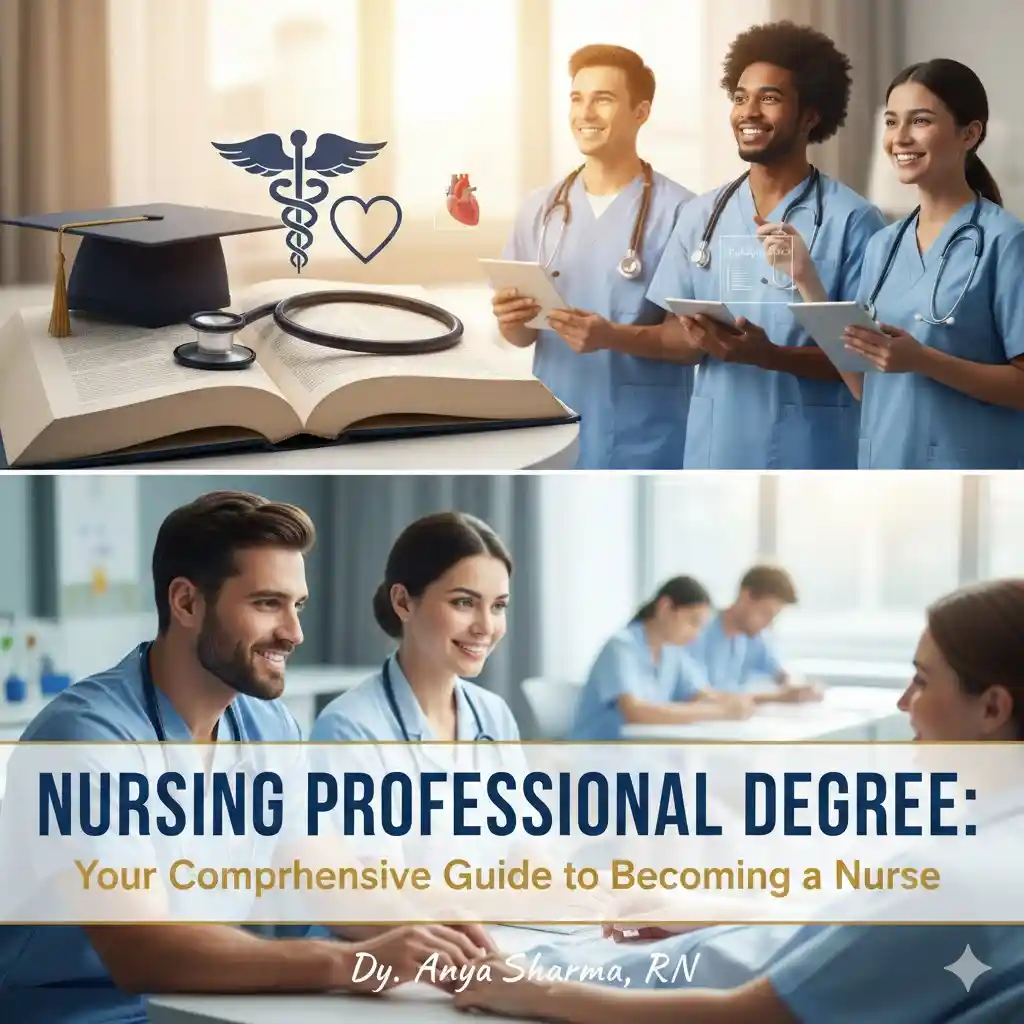
Nursing Professional Degree Some careers you pick cause they look clean on paper. Nine-to-five. Predictable. Easy-ish. Nursing? Nursing grabs you. Pulls you. Sometimes kicks you in the chest.
It starts small. A whisper. A feeling. That you’re meant to help people. Comfort strangers. Stay steady when everything else falls apart.
The Nursing Professional Degree isn’t a piece of paper. It’s a gateway. A transformation. Step in, you’re one person. Step out, you’re someone else. Someone stronger. Someone sharper.
You pick more than a degree. You pick identity.
And here’s the thing… this guide isn’t about sterile definitions. It’s about real life. Messy, human, exhausting, beautiful. Coffee in hand, 2 a.m., seasoned nurse whispering, “Sit. Listen. Life is like this.”
By the end, you’ll know:
-
What a Nursing Professional Degree real is
-
Types, levels, pathways
-
How it feels in real hospitals
-
Stories of nurses surviving, thriving
-
Salary, global opportunities
-
Specializations
-
Step-by-step career roadmap
-
Future trends
-
FAQs
What Is a Nursing Professional Degree?
It’s the education that makes you a nurse. A healer. Critical thinker. Patient advocate. Sometimes the only calm someone sees in chaos.
People think nursing is simple. Syringe, bandage, smile.
Nope. It’s science, psychology, ethics, leadership, anatomy, pharmacology, crisis management, patience. All at once.
The degree teaches you to hold that weight. To not crack.
It prepares you to:
-
Care safe
-
Perform procedures
-
Make fast decisions
-
Use evidence
-
Communicate with doctors
-
Talk to families
-
Document legal
-
Stand up ethical
Without it, nursing collapses.
Why This Degree Matters Now
The world is aging. Diseases keep changing. Tech keeps evolving. Hospitals are running. People need care. Fast.
WHO says 5.9 million nurses short (2024).
That’s massive.
This degree makes sure nurses exist. That hospitals survive. That patients aren’t abandoned.
When you earn it, you don’t get a job. You become backbone. 59% of global healthcare.
Without nurses, medicine is theory.
Types of Nursing Professional Degrees
Most think: study → graduate → work. Wrong. Nursing is a web. Paths, branches, ladders.
Diploma in Nursing
Duration: 2–3 years Outcome: Entry-level nurse Cost: Low Focus: Hands-on
Once most popular. Fading out in many countries. Still helps people who can’t afford longer routes.
Associate Degree in Nursing (ADN)
Duration: 2 years Outcome: Registered Nurse Good for: Quick start
Pros:
-
Fast
-
Affordable
-
Entry-level jobs
Cons:
-
Less salary than BSN
-
Fewer opportunities abroad
-
Hospitals prefer BSN
ADN nurses often later do RN-to-BSN.
Bachelor of Science in Nursing (BSN / BSc Nursing)
Duration: 4 years Outcome: Skilled RN
Why it’s the gold standard:
-
Higher pay
-
Better jobs
-
80%+ hospitals prefer BSN
-
Needed for advanced practice
-
Leadership training
-
Global migration options
BSN shapes careers, not resumes.
Master of Science in Nursing (MSN)
Duration: 1.5–3 years Focus: Specialization
Roles:
-
Nurse Practitioner
-
Midwife
-
Educator
-
Clinical Specialist
-
Administrator
MSN turns generalists into experts.
Doctor of Nursing Practice (DNP)
Highest clinical degree. Leads care. Changes systems.
Roles:
-
Chief Nursing Officer
-
Hospital director
-
Advanced practitioner
-
Quality leader
Duration: 3–4 years
PhD in Nursing
For research, theory, academia.
You do this if you want to:
-
Publish
-
Teach
-
Shape policy
-
Create knowledge
Duration: 4–6 years
Bridge Programs
Flexible for working nurses. Affordable. Life-saving.
Examples:
-
LPN → RN
-
RN → BSN
-
BSN → MSN
-
MSN → DNP
-
Accelerated BSN
Many nurses juggle work, family, life. Bridge programs fit that.
What Nursing School Real Feels Like
It’s not a walk in the park. It’s fire, tears, coffee, adrenaline.
First Year – Shock
You learn:
-
Anatomy
-
Physiology
-
Biochemistry
-
Pharmacology
-
Microbiology
-
Psychology
-
Medical math
Brain stretches. You see the body as a system. Everything connects. Overwhelming. Beautiful.
Second Year – Clinical Rotations
Your first patient. First IV wound death. First recovery.
Rotations:
-
Internal medicine
-
Surgery
-
Pediatrics
-
Obstetrics
-
Psychiatry
-
ICU
-
ER
-
Community health
Humanity raw. Unfiltered.
You cry. Smile. Question everything. Still go.
Final Year – Becoming a Nurse
Confidence grows. Thinking like a nurse. Prioritizing. Documenting. Communicating.
You feel responsibility. Not a student. Not full a nurse. Somewhere in-between. A rebirth.
Global Demand & Salaries
Nurses needed everywhere. Every hospital.
| Country | RN Salary | BSN Preferred? | Notes |
|---|---|---|---|
| USA | $80k+ | Yes | High demand |
| UK | £28k–40k | Yes | NHS prefers BSN |
| Canada | CA$70k | Yes | Very high demand |
| Australia | AU$65k–95k | Yes | Fast migration |
| UAE | AED70–120k | Yes | Tax-free |
| Germany | €35–50k | Yes | Language req |
| Saudi | SR60–110k | Yes | Accommodation free |
BSN, MSN: global standard.
Specializations
-
Emergency
-
ICU / Critical Care
-
Pediatrics
-
Oncology
-
Neonatal
-
Psychiatric
-
Surgical
-
Education
-
Midwifery
-
Anesthesia
-
Dialysis
-
Gerontology
-
Flight Nursing
Lifestyle, workload, emotional impact all different.
Case Studies
Aisha – First-Gen Nurse
BSN. Struggled financial. Overnight shifts. ICU now. Triple starting pay. “Nursing saved me as much as I save others.”
Daniel – ADN → DNP
ADN cause he could afford. Night work. RN-to-BSN. MSN. DNP. Chief Nursing Officer now. “It’s not where you start. It’s where you decide to stop.”
Step-by-Step Career Roadmap
-
Choose degree (ADN/BSN)
-
Coursework + labs
-
Clinical rotations
-
Graduate + licensure (NCLEX-RN etc.)
-
Start work
-
Specialize (MSN/DNP)
-
Advance career (Leadership, global, consultancy)
Future Trends (2025–2035)
-
AI monitoring patients
-
Robotic surgery & care
-
Telehealth
-
Personalized medicine
-
Nurse practitioners increase
-
Migration opportunities
-
Higher education required
-
Mental health focus
By 2030, BSN will likely be least everywhere.
Conclusion Nursing Professional Degree
Not for everyone. For the brave. Steady-handed. Soft-hearted. Sharp-minded. You don’t run from pain. You walk to it.
Lectures, rotations, exams, night shifts. They shape you. You become someone who can handle real-life emergencies, real emotions, real pressure.
Already know the path? Welcome. It changes lives. Yours included. NEWS TODAY
FAQs
-
What is a Nursing Professional Degree?
-
Required education to become licensed nurse.
-
Best degree?
-
BSN globally preferred.
-
Duration?
-
2–4 years initial.
-
Hard?
-
Yes. Emotional. Requires discipline.
-
Highest pay?
-
USA.
-
Work abroad?
-
Yes, BSN preferred.
-
ADN or BSN?
-
BSN better for opportunities.
-
MSN?
-
Master’s, advanced specialization.
-
DNP higher than MSN?
-
Yes, clinical doctorate.
-
Can nurses become doctors?
-
Yes, medical school needed.
-
Skills learned?
-
Clinical, communication, critical thinking, ethics, leadership.
-
Future?
-
More specialization, tech, higher education.
About the Author