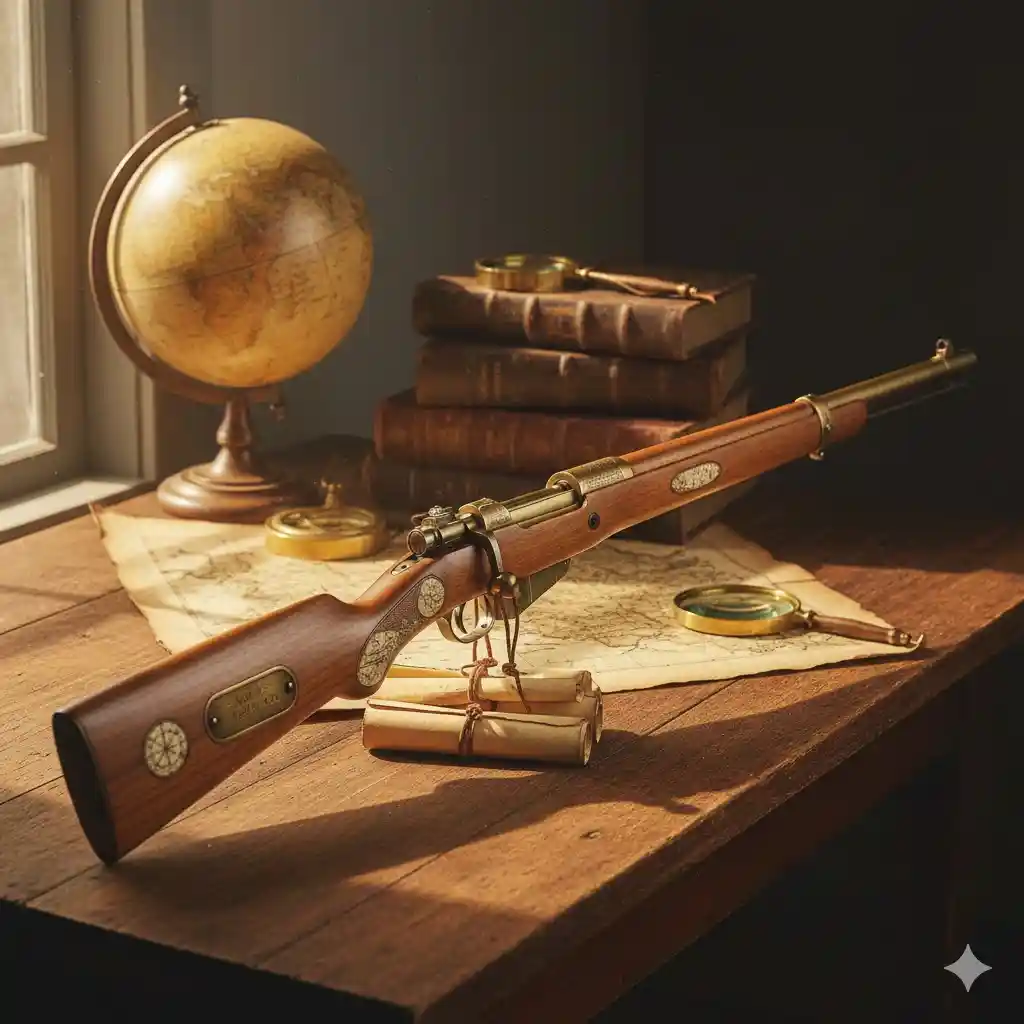
The Golden State Santa Fe Field Mauser. It’s one of those rifles that whisper history when you hold them. Old wood. Cold metal. Marks of a craftsman who cared. It’s not famous like the Winchesters or Remingtons, but it’s got a quiet pride. It tells stories of hunters, collectors, and men. who wanted a dependable tool they could trust when the light faded behind the hills.
Let’s talk about it. The origins. The feel. The quirks. Why it still matters.
A Legacy Built in California
After the war, rifles flooded America. Military stocks stacked in warehouses, thousands of Mausers waiting for purpose. California’s Golden State Arms Corporation stepped in. Pasadena. Mid-1950s. They took those rough, scarred rifles and gave them new life.
They called them Santa Fe Field Mausers.
Hunters wanted something reliable but cheap. Golden State gave it to them. Rebarreled. Refinished. Fitted with walnut stocks. Sudden, an old German war relic turned into an American hunting rifle. A strange kind of rebirth.
Some built from German K98 actions. Others from Czech Vz.24 or Yugoslav M48 rifles. Strong bolts. Deep rifling. All built around the mighty Mauser 98 action—the gold standard of bolt rifles.
People liked that. They liked knowing it would cycle even in mud and rain.
The Golden State Story
Golden State Arms wasn’t a giant company. It was more like a workshop with ambition. Import rifles, fix them, sell them cheap. They even made their own brand—Santa Fe Division—to sound classy.
Their ads called them “precision-crafted sporters for the modern outdoorsman.” It worked. Catalogs sold out. Mail orders came in. A California dream in walnut and steel.
The Golden State Santa Fe Field Mauser became the poor man’s Winchester. Affordable, accurate, good enough to last generations.
And it did.
The Mauser Bloodline
Every Santa Fe rifle carried that Mauser heart. A bolt so smooth it felt like silk when oiled right. The old 98 action was almost impossible to break. It fed, fired, and ejected like clockwork.
They came in popular American calibers—.30-06, .308, and 7×57 Mauser. That made them easy to use. Easy to love.
FeatureMilitary MauserGolden State Santa Fe Field MauserActionMauser 98Same, reworkedStockMilitary hardwoodAmerican walnutCaliber8mm.30-06 / .308 / 7x57SightsIronAdjustable sporter sightsFinishWar-grade bluePolished or matte
Hunters noticed the difference right away. The new rifles were lighter. Balanced. A gun you could carry all day through brush without feeling it drag on your shoulder.
Design That Worked
No gimmicks. function. The Santa Fe Field Mauser had adjustable rear sights, ramp-style front posts. a checkered walnut stock, and a crisp trigger that broke clean. The finish—deep blue or polished metal—made it handsome without being fancy.
And that bolt. Smooth as butter. No sticking. No rattle. a solid click-clack that told you it was ready.
Some versions came as Deluxe Sporters, others as Model 1200s with fancier trims. A few chambered for odd calibers that now make collectors grin.
They stamped “Santa Fe Arms” or “Golden State Arms Corp.” on the barrel. Those marks tell you you’ve got the real thing.
In the Field
Ask an old-timer. He’ll tell you what these rifles were like. He’ll say, “That Mauser never missed. Not once. Took down deer, elk, even a black bear once.”
That’s the thing. They weren’t flashy. solid.
Hunters loved how they shot. Tight groups. Manageable recoil. A steady aim in rough weather. You could trust it when your hands were cold and your breath hung in the morning air.
A 1964 magazine once said:
“It carried light, shot straight, and never quit. What else do you want?”
Collectors and Hidden Value
Back then, nobody thought these rifles would become collectible. They were working guns. But time changes things. Now, folks chase them.
They represent something post-war America, clever craftsmanship, history reborn.
ConditionApproximate ValueExcellent (unfired)$700–$800Good (used)$400–$500Fair (worn or refinished)$200–$300
Original parts raise the price. Matching numbers help too. A clean stock, sharp markings—those details matter.
The Golden State Santa Fe Field Mauser isn’t as pricey as a German K98, but collectors love it for what it stands for. Simplicity. Strength. Soul.
Care and Keeping
These rifles last if you treat them right. Clean after use. Oil the bolt. Keep the stock dry. Avoid harsh solvents they eat the finish.
Don’t over-restore. Let the patina stay. It’s part of the rifle’s memory.
If you need parts, many Mauser 98 components fit fine. Springs. Triggers. Extractors. They’re still made today.
Check GunPartsCorp, old-school forums, or gun shows. Somewhere, someone always has what you need.
How It Stacks Up
FeatureSanta Fe Field MauserRemington 700Winchester 70ActionMauser 98Push-feedControlled-roundOriginRebuilt importU.S. madeU.S. madeWeightModerateLightModeratePrice$300–$600$800+$1,000+
The Santa Fe doesn’t outshine the others. It’s different. Built from history. It’s the rifle for someone who wants character more than polish.
It shoots straight. It tells a story. That’s enough.
Finding One Today
They pop up sometimes. GunBroker, Rock Island Auction, GunsAmerica—you’ll see them there. Local gun shows too.
Look close before buying. Make sure the barrel stamp reads Santa Fe Arms or Golden State Arms Corp. Pasadena. Check the numbers. Avoid rifles with swapped bolts or mismatched parts.
The good ones feel right when you shoulder them. Balanced. Alive. News Today
A Rifle That Endures
The Golden State Santa Fe Field Mauser doesn’t roar for attention. It sits quiet in the rack, waiting. When you pick it up, you feel the weight of decades. A mix of European steel and American grit.
Not perfect. Not famous. But real.
That’s what makes it special.
Many rifles became legends. This one became a companion.
FAQs About the Golden State Santa Fe Field Mauser
- When were they made? 1950s to 1960s. Pasadena, California.
- Safe to shoot today? Yes, if inspected by a gunsmith and chambered in standard calibers like .30-06 or .308.
- How to identify one? Look for markings: “Santa Fe Arms” or “Golden State Arms Corp.”
- Common calibers? .30-06 Springfield, .308 Winchester, and 7×57 Mauser.
- Are they collectible? Absolute. Limited runs, solid build, historical charm.
- Where to find parts? GunPartsCorp, Mauser forums, vintage gunsmiths.
- Accuracy? Often under 1.5-inch groups at 100 yards.
- Stock replacement possible? Yes. Most Mauser 98 stocks fit perfect.
- Why cheaper than German Mausers? They’re post-war imports, not military originals.
- Best way to store it? Light oiled, cool and dry. Let it rest easy.
About the Author