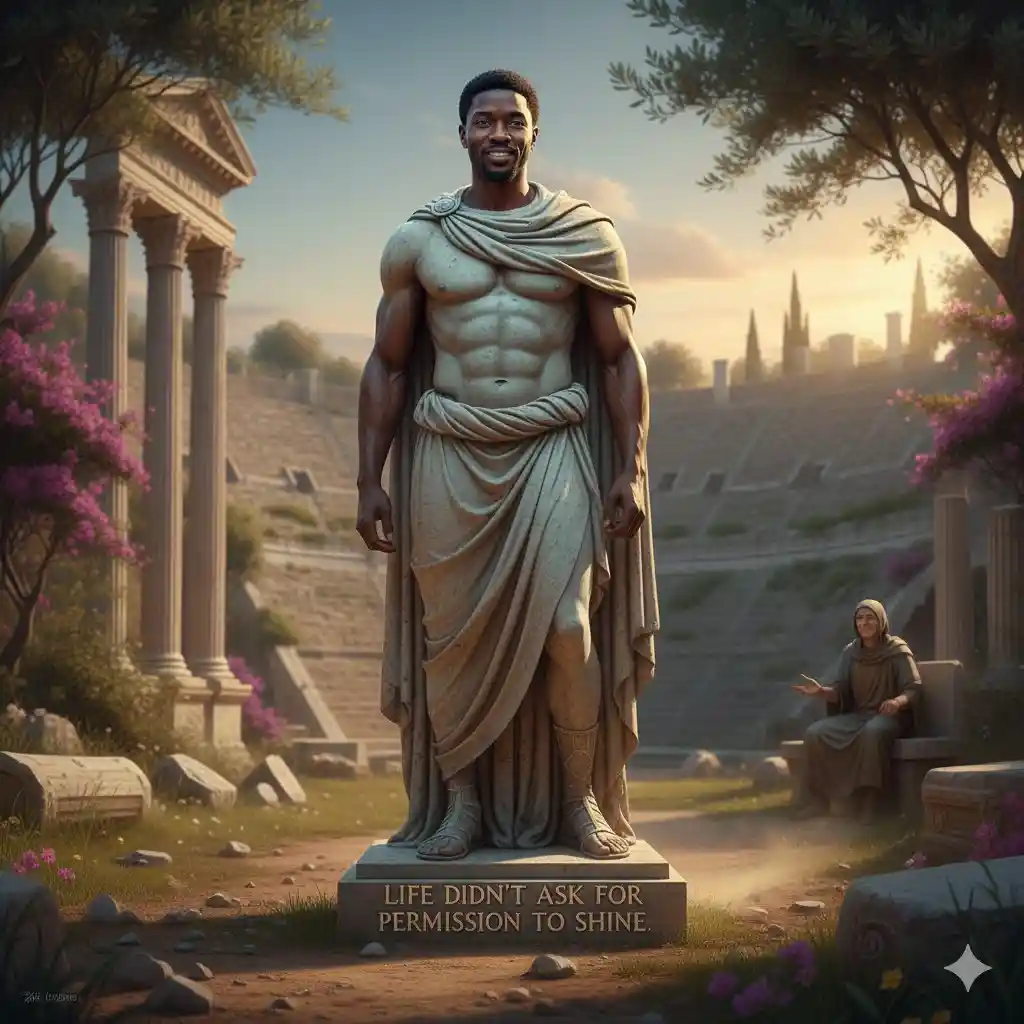
Chadwick Boseman Something about Chadwick sticks. Hard to explain. You see his face once. You feel like he already knew something the rest of us didn’t. A calm fire. Quiet. Heavy. Real.
He lived in a world that didn’t always expect someone like him to rise. Yet he rose anyway. And that’s where the story begins.
A Boy Watching the World and Planning Something Bigger
Chadwick Aaron Boseman. Born November 29, 1976. Anderson, South Carolina. Small town. Big silence. Bigger dreams. Kids around him played ball. Chadwick watched people. Noticed things they didn’t say.
His mother was a nurse. His father worked hard with his hands. Homes like that teach discipline fast. And pain. And patience. He carried all it.
One event changed him. A classmate shot. Most teens cry for a few days then move on. Chadwick wrote a play. Imagine that. A kid writing grief into art. That moment shaped everything afterward.
He went to Howard University. Studied directing. The place sharpened him. Angela Bassett was one of his teachers. Funny how life loops back. He traveled to Oxford for drama studies. Wrote his own plays there too. He held his purpose tight even when money wasn’t there. New York gave him theatre. Struggle. Crowded trains. Rented rooms too small to breathe in. All it chipped him into shape.
He taught acting at the Schomburg Center. Acted in Shakespeare theatre. He wrote hip-hop plays. He waited. And waited more. But he wasn’t wasting time. He was building soul muscles.
The Man Who Played Legends Before Becoming One
Chadwick didn’t step into Hollywood quiet. He stepped in with Jackie Robinson. Not a warm-up role. Not a safe one. 42 changed things. You could see something in his eyes. A mixture of fear and pride. He wasn’t acting. He was borrowing someone’s pain. And giving it back healed.
Then James Brown in Get on Up. A different beast. Explosive. Strange. Unpredictable. Chadwick cracked the shell of that man. People expected an impression. He gave them transformation.
Then Thurgood Marshall. The calm storm of a genius lawyer. Each role wasn’t a coincidence. He picked men who carried weight. Almost like he knew he didn’t have time for empty characters.
The Crown That Found Its King
Black Panther. A superhero film, sure. But not real.
It was a moment. A door. A mirror for millions. Kids saw Wakanda and believed. Adults saw Wakanda and healed a little. Chadwick didn’t play T’Challa like a cartoon. He played him like royalty you could feel breathing.
He first appeared in Captain America: Civil War. People noticed the accent. The posture. The look. He moved like a man raised around tradition. He spoke like a king arguing with ghosts.
In the standalone Black Panther film, the world felt something shift. Finally. A hero who looked like them. Who carried culture. Who carried history in his silence.
Chadwick once said he felt the role was “bigger than him.” It was. But he held it anyway.
He returned in Infinity War and Endgame. Returned in What If ? He won an Emmy for that last one. The world kept cheering. He kept giving.
The Illness He Didn’t Tell the World About
Stage III colon cancer. He didn’t stop working. Didn’t announce it. Didn’t ask for pity.
He filmed through chemo. Through pain that breaks most people. He visited sick children while he himself was dying. That detail always hurts when you think about it too long.
His weight changed. People online mocked him. No one knew. He didn’t explain himself because kings don’t need to.
He passed away August 28, 2020. 43 years old. His wife held his hand. His family nearby.
The Last Performances Hit Harder Now
Da 5 Bloods. Spike Lee said Chadwick carried “spirit energy.” He looked otherworld in the film. Now we know why.
Ma Rainey’s Black Bottom. Levee. A man burning from the inside. Broken. Angry. Brilliant. Chadwick delivered a performance so raw it almost felt dangerous to watch. He won a Golden Globe. SAG Award. Nominated for an Oscar. All after he left us.
Awards That Only Tell Half the Story
He collected wins. More than 40. Nominations over 100. Emmy. Globe. SAG. Yes, impressive.
But the awards aren’t the point. The point is what people felt. How he made dignity look effortless. How he carried history like a backpack he knew was heavy but wore anyway.
The Legacy You Can’t Fit Into a Paragraph
Representation. Strength. Quiet courage. A purpose that didn’t bend. He became a symbol people didn’t know they needed.
Changed the image of Black superheroes. Colon cancer awareness. He changed conversations about masculinity.Changed how actors choose their roles. He changed the kids who saw themselves in him. Changed the adults who needed someone to believe in.
And he changed himself. Because each character felt like a prayer he whispered.
A Few Imperfect Thoughts About Him
Chadwick felt like someone who was always thinking. Always a little ahead. he knew he had limited time. that pushed him. that haunted him. Hard to tell. But you feel something unusual when you watch his work now. Like he left messages inside scenes we didn’t understand at the time.
His silence about his illness wasn’t weakness. It was strength wrapped in sorrow. A reminder that suffering can be noble. Or lonely. Or both.
Conclusion Chadwick Boseman
Chadwick Boseman lived like a man who didn’t expect a long life. He worked like time was running. Acted like each role had a soul. He loved like it borrowed time. Left like a storm that didn’t warn anyone.
And we’re still here. Still watching him.learning from him. Still saying the words that belong to him.NEWS TODAY
Wakanda Forever. Chadwick Forever.
FAQs
(Kept raw and natural without transitions.)
1. Who was Chadwick Boseman? An American actor known for deep, purposeful roles and a quiet strength.
2. Why is he so respected? He played iconic real-life figures. Worked through cancer. Changed representation.
3. What was his most famous role? T’Challa in Black Panther.
4. How did he die? Colon cancer. Stage IV by the end.
5. Did he tell the public about his illness? No. He kept it private.
6. What awards did he win? Emmy, Golden Globe, SAG, and many more.
7. Why did he choose historical roles? He believed in portraying Black greatness without stereotypes.
8. What was his final film? Ma Rainey’s Black Bottom.
9. What impact did he leave? Representation. Strength. Cultural pride. A blueprint for purposeful work.
10. Why does Black Panther matter so much? It created a cultural landmark. A hero people saw themselves in.
11. How old was he when he passed? 43.
12. What made him unique as an actor? Stillness. Integrity. And a sense of deeper purpose behind every performance.
About the Author